
Se o pessoal está visitando Buenos Aires e pensa viajar para outros destinos do país, o melhor jeito de obter informação precisa e boas dicas são as Casas Estaduales (Casas de Provincia, segundo a denominação regional argentina). As mesmas são representações (cuasi embaixadas) de cada região da Argentina, em Buenos Aires. São atendidas por gente de cada estado que poderá orientá-lo da melhor forma ao respeito das rotas turísticas, alojamento, gastronomia, etc. Hostel Colonial compartilha as direções delas na cidade.Casa da Província de Buenos Aires
Av. Callao 237 - (54 11) 4371 7046 / 47
Casa da Província de Catamarca
Av. Córdoba 2080 - (54 11) 4374 6891
Casa da Província del Chaco
Av. Callao 333 4º - (54 11) 4372 0961
Casa da Província de Chubut
Sarmiento 1172 - (54 11) 4382 2009
Casa da Província de Córdoba
Av. Callao 332 - (54 11) 4371 1668
Casa da Província de Corrientes
San Martín 333 4º - (54 11) 4394 7390
Casa da Província de Entre Ríos
Suipacha 844 - (54 11) 4328 5985
Casa da Província de FormosaHipólito Yrigoyen 1429 - (54 11) 4381 7048
Casa da Província de Jujuy
Av. Santa Fe 967 - (54 11) 4393 1295
Casa da Província de La PampaSuipacha 346 - (54 11) 4326 0511
Casa da Província de La Rioja
Av. Callao 745 - (54 11) 4813 3417
Casa da Província de Mendoza
Av. Callao 445 - (54 11) 4371 0835
Casa da Província de Misiones
Av. Santa Fe 989 - (54 11) 4317 3700
Casa da Província de Neuquén
Maipú 48 - (54 11) 4343 2324
Casa da Província de Río Negro
Tucumán 1916 - (54 11) 4371 7078
Casa da Província de Salta Av. Roque Sáenz Peña 933 - (54 11) 4326 2456
Casa da Província de San Juan
Sarmiento 1251 - (54 11) 4382 9241
Casa da Província de San Luis
Azcuénaga 1087 - (54 11) 4822 3641
Casa da Província de Santa Cruz
25 de Mayo 277 1º - (54 11) 4343 8478
Casa da Província de Santa Fe
25 de Mayo 168 / 178 - (54 11) 4342 0408
Casa da Província de Santiago del Estero
Florida 274 1º - (54 11) 4326 9418
Casa da Província de Tierra del Fuego
Sarmiento 745 - (54 11) 4322 7524
Casa da Província de Tucumán
Suipacha 140 - (54 11) 4322 0010

 This program points to the strengthening of the city religious circuits and prioritizes the revaluation of the religious architecture in an annual calendar that includes different celebrations, festivities and pilgrimages. The Religious Tourism is an activity that moves millions of people around the world and its cultural heritage is one of the main riches of Buenos Aires. The cultural diversity and the different communities reflect in several cults that mold the Porteño identity, add activities and attractive in each creed.
 During this week, two of the city’s major religions celebrate their Easter. The Christians commemorating the Holy Week, the Passion, Death and Resurrection of Jesus. The Jewish community, with its festivity that shows their spirit of freedom and birth of their people, the passage from slavery in Egypt to the miraculous salvation and liberation, physical as well as spiritual.


 Untertürkheim: in San Telmo, on 899 Humberto Primo St., this German pub and restaurant has generous dishes and great beer. Traditional German brands and some craft beer they produce right there.
 Los cafés de Buenos Aires: siempre son un buen refugio cuando empieza a caer la tarde y el viento frío del Río de la Plata sopla. También son una opción ideal para esas lluvias repentinas que paralizan la ciudad. Los café porteños son calentitos, acogedores. En especial los de la Avenida Corrientes (pensamos en El Gato Negro, La Giralda, La Paz y otros tantos). Una mesa cerca de la ventana para perder la mirada entre la gente que se apura por llegar a su casa y una taza de café caliente para aferrar con las dos manos y olvidar el frío.
 Un paseo por los Bosques de Palermo: al igual que cualquier área verde, nos recuerda cómo el cambio de estación modifica la naturaleza. Volvemos a pisar hojas muertas, los árboles se cubren apenas con lo que les queda de marchito y una pareja resiste el frío abrazándose en un banco. El puente blanco sobre el lago del Rosedal nos transporta a un paisaje campestre y el agua que corre por debajo, fresca, calma, se agita solo con esas hojas que siguen cayendo.
 Un poco de jazz: no sólo de tango vive el porteño. El jazz argentino tiene más de 80 años de tradición y grandes músicos. El otoño es una gran estación para disfrutarlo, porque convoca a la intimidad de un ambiente cerrado. Pensamos en Thelonious (Salguero esquina Guemes, Palermo) o Notorious (Callao 966, Congreso), algo de luz baja, un trío de piano, contrabajo y batería con sabor de latin jazz, algo de buen bourbon para acompañar y nuestro pié intentando seguir el ritmo frenético de la banda. Autumn leaves, un standard infaltable para la ocasión.

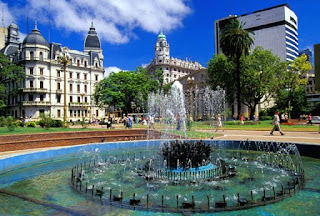 The proximity to sightsees: the first thing a traveler seeks, the reason why tourism exists, is to visit and get to know the most particular and traditional of each city. Hardly, somebody would visit Paris without seeing the Eiffel Tower, or skips the Empire State in NYC. In Buenos Aires, the logic indicates you must see the Obelisco, visit Plaza de Mayo, the Casa Rosada, the Congress and Puerto Madero. All this places that open tourist guides, are located on Downtown Buenos Aires or just 10 blocks away from it. Here is Hostel Colonial too.
 1. Carlos Gardel. Las Voces del Tango. (Sony BMG, 2009). A voz do tango, sem dúvida, Gardel é um símbolo da música portenha. Abundam as compilações e as homenagens, o que faz o assunto complicado. Las Voces del Tango é uma edição recente e muito cuidada. Neste disco, versões remasterizadas dos seus maiores sucessos como Mi Buenos Aires Querido, Volver, Cuesta Abajo, El Día que me quieras ou Por una cabeza.
 2. Horacio Salgán y su Orquesta Típica. (El Bandoneón, 1994). Dois grandes maestros do tango. O pianista Salgán, a maior figura viva do tango -prestes a cumprir 100 anos- e o cantante Roberto “Polaco” Goyeneche, uma das grandes vozes que surgiu da sua orquestra (a outra foi Edmundo Rivero). Versões inesquecíveis dos anos 1950 a 1954 como Mala Junta, Siga el Corso e Tierra Querida.
 3. Osvaldo Pugliese. En El Colón. (EMI-Odeón, 2001). A orquestra do Osvaldo Pugliese foi famosa por manter um equilíbrio justo entre o tango clássico e o contemporâneo. Inovadora no ponto justo. Neste show apresentado em dois CD, pode se apreciar o melhor deste compositor interpretando clássicos como Los Mareados, Melodía de Arrabal, La Yumba ou Milonga para Gardel.
 4. Astor Piazzolla. Antología. (Sello BMG, Edición Crítica, Año 2007). Provavelmente o maior compositor argentino, veio revolucionar o tango. Bandoneonista de exceção, fusionou o tango com a música clássica e o jazz, construindo uma carreira internacional e gerando algo de recusa local pelas suas inovações. O reconhecimento local chegou ao fim da sua trajetória. Nesta antologia está condensado o melhor da sua carreira, canções chaves como Adiós Nonino, Balada para un Loco, Chiquilín de Bachín e as inigualáveis Estaciones Porteñas.
 5. BajoFondo Tango Club. BajoFondo Tango Club (Universal, 2002). Pioneiros regionais do tango eletrônico, esta agrupação formada por argentinos e uruguaios captura a essência do ritmo portenho e a renova. Produzida por o dois vezes ganhador do Prêmio Oscar, Gustavo Santaolalla, BajoFondo continua aproximando o tango às novas gerações. Neste CD se definem os traços principais de um novo estilo que hoje causa furor na cidade.

 Diego Armando Maradona Stadium, La Paternal: the home team here is Argentinos Juniors, the club where he started his career and where he played between 1976 and 1980. When the stadium was redesigned in 2003, both its President and the fans chose to name it after the current Argentine team coach to honor him. The club is located in the residential neighborhood of La Paternal. The main entrance is on 1271 Punta Arenas St. The outside walls are covered by paintings where you will find “El Diego” (as he’s called by his followers).
 Boca Juniors Stadium and Museum, La Boca: perhaps the place that most identifies with Maradona. The team where he became world famous and the one he supports. He played there in 1981 (winning the local championship) and returned to end his career between 1995 and 1997. He has an Executive Box in the Stadium and assist to every game Boca plays there. In the “Pasión Boquense Museum” you’ll find different objects and memories of his years in the team. The Stadium and the Museum are located on 805 Brandsen St., La Boca.


 Planetario (Av. Sarmiento y Av. Figueroa Alcorta, Palermo).
 The Irish community in Buenos Aires is not particularly numerous, but from some year now (since 1997 until today) Saint Patrick’s Day has become a popular celebration among porteños, gathering more than 100.000 people in the past years. Goblin costumes, fake red beards, tall green hats and hundreds and thousands glasses of beer in all its colors and presentations are part of the picture.
 Olímpica: un clásico del centro porteño. Ubicada sobre la Av. de Mayo 752 (esquina Chacabuco), a pocas cuadras de la Casa Rosada. Es una muestra excelente del helado artesanal, de una heladería que mantiene su calidad y es atendida como negocio familiar hace unas cuántas décadas. Este único local abre de lunes a domingo de 10 a 22hs. y tiene dos sabores imperdibles: el dulce de leche con nuez y el chocolate Rocher.
 O dicionário decidiu incluir também as frases escatológicas o de conteúdo sexual que são de uso comum. Por exemplo: "abrirle la boca al bagre" (tirar a virgindade de uma mulher), "levantar carpa" –levantar a barraca- (ter uma ereção que insinua nas calças) ou "hacer manualidades" –fazer manuais- (masturbar-se). Finalmente, podem se encontrar clássicas frases como: "Andá a cantarle a Gardel" –vai cantar ao Gardel- (expressão de incredulidade), "¡De acá!" (usada para enfatizar uma negativa rotunda) ou a recente "Que se vayan todos" –vão embora todos- (expressão de desgosto general forjada durante o colapso econômico e político de dezembro de 2001).

 Victoria Ocampo (1890-1979): intellectual, writer and editor. She was the link between Europe and Argentina in the beginnings of the XX Century. Her avant-garde style made her a part of the Sur magazine, which disseminated the new Argentine literature back then. She brought some cultural icons of that era like Rabindranath Tagore and Igor Stavinsky. She was the only Argentine present in the foundation of UNESCO and in the Nuremberg Trials.
 Eva Duarte de Perón, “Evita” (1919-1952): probably one of the best-known Argentine women. With humble origins, se arrived to Buenos Aires in the mid 30s to start her career as an actress. She met Juan Perón in 1944, months before he assumed the presidency of Argentina. In 1951, she became the first women to be elected vice presidential candidate. She died a year after that, remaining his legacy through the social aid foundation Eva Perón. In 1975, Andrew Lloyd Weber immortalizes her in his famous musical.
 Alicia Moreau de Justo (1885-1986): 101 years lived this outstanding Argentine doctor and politician. Socialist activist and precursor of feminism in Argentina. She was the first women ever to graduate from the Medical School (in 1913 with honors) in a time when women weren’t accepted in colleges. In 1947, she supported the law that promoted feminine vote (a project she had presented several times before with no success). During the last military government, she became a key Human Rights defender.


 Since 1986, by the initiative of its actual coordinator Sara Vinocur, this fair settled in Mataderos with the objective of creating a permanent space for production and spreading of our traditional cultural roots. 24 years of working continuously have gathered here all the regions and small towns of Argentina through their rich cultural expressions and unique distinctive habits.
 The Fair opens on weekends at noon, in the Square located on the corner of Lisandro de la Torre Av. and De Los Corrales Av. You can get there by the buses number: 36, 55, 63, 80, 92, 97, 103, 117, 126, 141, 155, 180 y 185; o by taxi (it will cost you something like US$ 10 from Hostel Colonial, Downtown). For more information, visit the fair’s website by clicking